The Problem With Your Marketing is Consistency

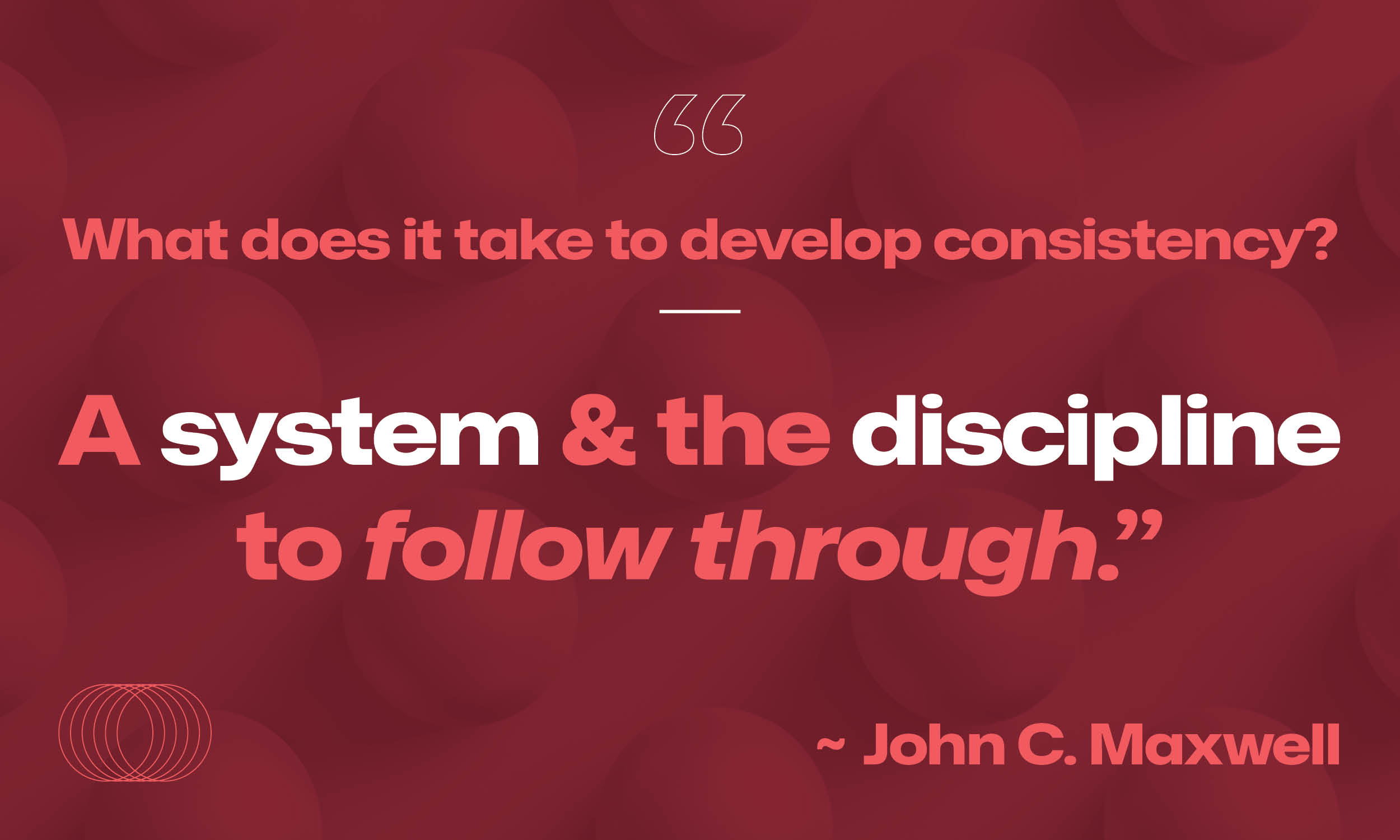
Decorative image with a quote from John C. Maxwell.

“What does it take to develop consistency? A system and the discipline to follow through.” These are wise words from John C. Maxwell, and the sentiment hits hard when it comes to consistency in marketing.

You’ve seemingly tried it all, but nothing’s working. You had a few perfectly crafted social posts that did numbers on their respective platforms. You cranked out a valuable blog that helped to drive web traffic. Somehow, though, meaningful results never seemed to follow. Leads just didn’t come in, and those that did failed to convert. Through it all, you’re left wondering: Why is my marketing not working?

Sometimes we have to have difficult conversations, and this blog is, in a way, one of those conversations. So let’s tear the band-aid off and come out with it: The problem is your consistency in marketing (or the lack thereof).

Why Is My Marketing Not Working?”

Small- to medium-sized businesses often face a similar pattern. Time and money are invested into marketing, and when the results are less than ideal, efforts are pulled back. Some time later, a new bold idea is put into action, only to lead to the same outcome. Rinse. Repeat.

It can be frustrating, for sure. The world of marketing can be unpredictable, but that doesn’t mean these frustrating outcomes are all based on bad luck. But the frustration is still understandable. You work hard and put a lot of effort into your business. You need this to work. But here’s the tough pill for some to swallow: Many marketing efforts aren’t given enough time or continuity to work at all. The soil is there, but the plant is uprooted before it can take hold. The root cause is inconsistency.

The “Start and Stop” Marketing Cycle

Think back to the last time you were truly swamped. Was it a busy season? A big project? Chances are your team was stretched thin, and what was the first thing you put on the back burner?

Marketing. Almost always marketing.

This is a common start-stop cycle and it can cripple the efforts of the most well-intentioned small or medium business. The process goes:

  • Business is dragging → You run a campaign and push out punchy content
  • Business picks up → You put your marketing efforts aside
  • Business once again slows → You find yourself needing to start from scratch

You aren’t just pausing every time this process repeats; you’re losing ground, potentially while your competition is gaining it. All that momentum you’ve built, gone. The audience you attracted had no reason to stick around, so they left.

This “deadly” cycle undermines the progress you’ve worked so hard to make.

Being Consistent Matters More Than Being Perfect

Do you want a one-hit-wonder or continued growth and success? We’re willing to bet you prefer the latter, so consider this: A good message delivered consistently will, in the long-term, outperform a one-time, brilliant message.

Consistency in marketing builds familiarity. That familiarity turns strangers into prospects, prospects into customers, and customers into loyal fans who keep showing up. It’s not magic. It’s brand recognition. It’s repetition. In fact, there’s research that shows that five to seven impressions are needed in order to get a consumer to recognize a brand. So that one-hit wonder? It’ll be forgotten pretty quickly. A single campaign or a single month of solid posts won’t get you there. Showing up over and over in the right places will.

Here are some stats to consider:

  • Consistent brand presentation can increase revenue by 23–33%, according to data from Lucidpress.
  • 68% of companies say brand consistency contributed at least 10% to their revenue growth.
  • 79% of consumers are more loyal to brands that maintain consistent communication across all channels.

Despite all this, only a small percentage of B2B companies say their branding is consistent. 

The Long-Term Nature of Effective Marketing

We live within a culture of instant gratification, but some of the best things in life require long-term nurturing. If you expect your marketing to deliver leads right out of the gate, you’re in for some disappointment. We aren’t being pessimistic. We’re being realistic. The good news is there’s a solution!

Think of marketing as cumulative. One blog post isn’t going to bring undeniable success your way, but it will play its own small part in the bigger picture. If you don’t want that small part to be wasted, you need to follow the post up with another, and another, and another. Every social post, digital ad, and email is a small deposit into an account. The balance will only grow slowly at first, but you will see the light once it starts to compound. Let’s look at how that plays out across some common channels.

SEO & Content

Search engines love consistency. A website that publishes quality content on a regular basis slowly builds its authority over time, which leads to an increase in organic traffic. One great article simply won’t cut it. A steady stream of good content? Now that’s something Google can fall in love with.

Social Media

Similarly, the all-powerful social media algorithms favor accounts that post regularly. Past that, it’s helpful to get your name in front of your audience without prolonged periods of absence. If you post sporadically, you make your brand easy to forget.

Email Marketing

Email has the potential to be a high-ROI channel for you, but only if you use it regularly. An email list you ignore for a long time is a cold list, and a cold list isn’t good for conversions.

Digital Advertising

Just because you’re putting money into it doesn’t mean you can get lazy with it. Digital campaigns that run for prolonged periods can gather data, optimize over time, and become more efficient when they’re nurtured. If you cut them off before they hit their stride, you’re crippling your chances at success in your paid campaigns.

The businesses that get the most out of their marketing strategy development aren’t necessarily the ones with huge budgets. They’re the ones who have a long-term plan and stick to it, even with a limited budget.

Common Barriers to Consistency in Marketing

Wondering why so many businesses fail to remain consistent? Unfortunately, knowing the problem is only a part of the battle. Say you’re a business owner who’s well aware that sales could be better. What’s stopping you from stepping it up? While there are plenty of possible reasons, there are a few we’ve noticed again and again across the board.

  • No clear plan: Many businesses have their daily routine down pat. They know how to make their existing products look pretty. They can deliver a mean elevator pitch. But without a content calendar or defined schedule, all that skill and knowledge goes into reactive marketing, or “random acts of marketing.” Posts only happen when they pop into your head, and ads are only run when you’re desperate for sales. That’s an approach that’s more of a gamble than a strategy.
  • Limited time and resources: This one’s real. This one’s understandable. If you’re a small business owner, you’re wearing eight different hats at any given moment. A ninth may make it all come crashing down. This is where marketing strategy development matters. Once you have a system in place that doesn’t require you to bend over backwards to maintain it, things get better. Getting there is the hard part.
  • Unrealistic expectations: We said earlier that we live in a culture of instant gratification, and a downside of that becomes apparent here. When results don’t appear immediately, it’s tempting to conclude the effort isn’t worth it. But abandoning a marketing effort too early is like turning the lights on before a picture is fully developed: You’ll never see the end result.

Step one is recognizing these barriers. After that, you need to build a system that accounts for them. If you don’t have the manpower, we know some people who can do the heavy lifting for you (spoiler: It’s us).

Building a Marketing Habit

Reaching consistency in marketing doesn’t require a massive overhaul. Just a plan you can realistically stick to. Here’s how you might achieve that goal:

Start With Realistic Goals 

Two posts a week for an indefinite amount of time is a much better strategy than posting twelve times in a week and then going radio silent. Determine what your realistic capacity is and go from there.

Choose Your Channels With Intention

You don’t need to be everywhere. An ice cream shop doesn’t need to publish whimsical vibe posts on LinkedIn, and an accounting firm probably doesn’t need to be posting on Snapchat. Choose two or three platforms you can reliably be on. The ones your customers are already on! Once you reach your stride on those platforms, then you can think about expanding. If you’re unsure of the platforms your business should be on, we can help you out.

Use a Content Calendar

We can’t stress enough how many times a content calendar has saved our hides. Considering the breadth of services we offer, we have a bunch of projects going on at any given time. Keeping everything organized in our heads would be impossible. A simple calendar maps out a publishing plan and takes the messy guesswork out of achieving consistency in marketing. No need for the calendar to be complicated, but it does need to exist. As our Social Media Manager, Maddy McClellan puts it, “Content calendars are the crucial first step to content creation. They allow us to plan, review old content, link to external articles, and seek approval from account managers before designing content.”

Treat Marketing as a Function, Not a Project

While projects have end dates, marketing as a whole doesn’t. It goes on, only stopping when consistency does. If you’re thinking of it as something to be finished, you’re viewing it through the wrong lens. It needs to be built into your operations like sales, accounting, or customer service. If sales are the electricity of a successful business, marketing is the running water. You’re going to struggle when you run out.

Get Leadership Involved

If your leadership team doesn’t buy into your marketing plan, you can lose steam (I said that with leadership’s approval). If your marketing isn’t working despite attempts to stay consistent, ask yourself if the people at the top are buying into it.

Consistency: The Real Competitive Advantage

Outmarketing your competition doesn’t happen through having a bigger budget. It happens through discipline. Discipline to show up regularly for your audience in inboxes, search results, and feeds. Consistency in marketing keeps you in the conversation and sparks the recognition you need to turn prospects into sales. Success isn’t instant, but the wait is worth it if you stick with it.

At the same time, you can only stretch your resources so far. You may find yourself unable to keep up with that key consistency if you only have so many people on your team. That’s where ArachnidWorks comes in. We do the heavy lifting for you, starting with marketing strategy development. From there, we keep up the content and conversation with your audiences while keeping you in the loop. There’s a gap between intention and outcome, and that gap is where we can be the most help to you.

Random acts of marketing end here. Get in touch and we’ll help you develop and maintain consistency in your marketing.
6 Essential 2026 Marketing Trends to Look Out For

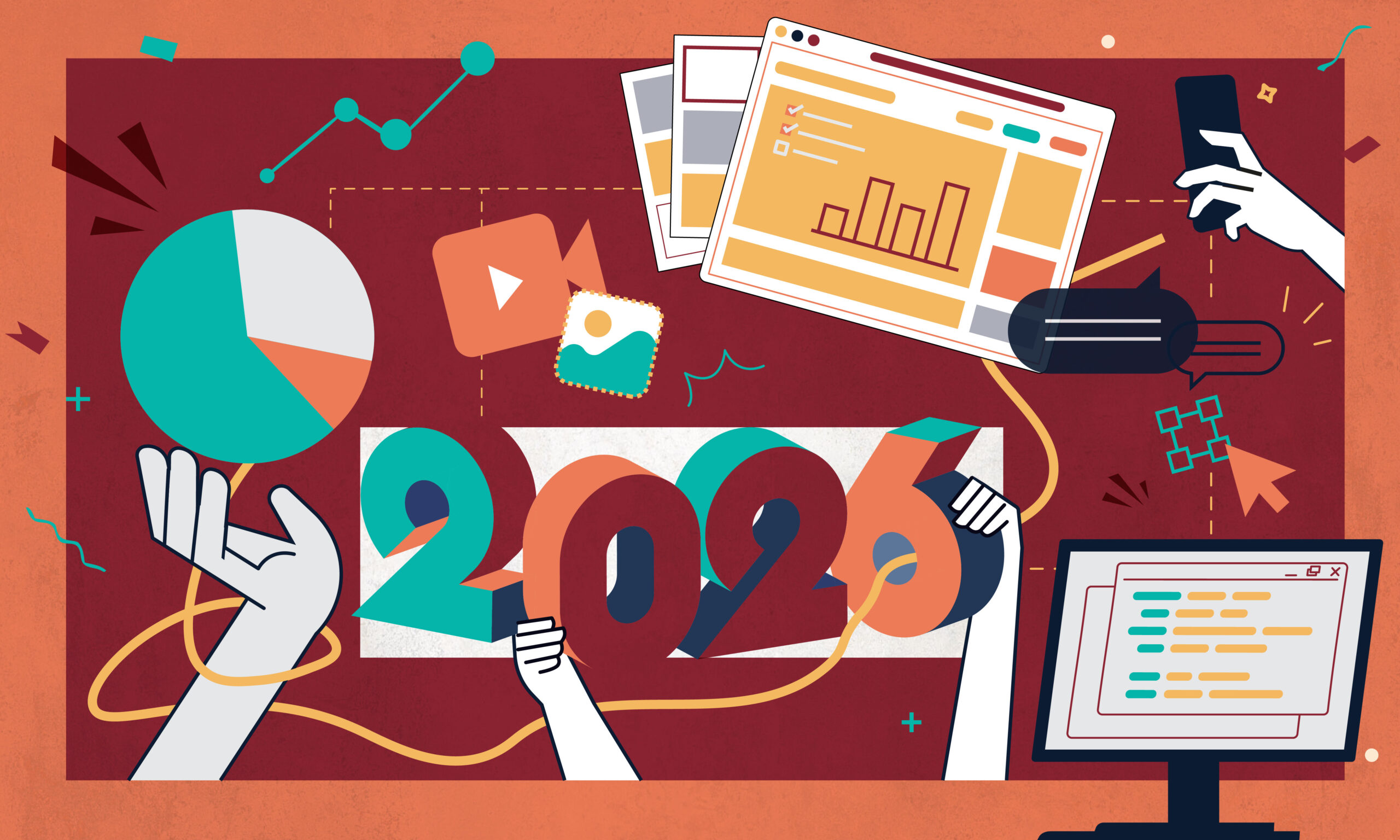
2026 marketing trends decorative graphic

The year is 2026. Your fridge can order groceries. Big brand voices are making videos from their homes while dressed in their pajamas from the waist down. And, for some reason, you have to plug your couch in. In short, innovation has hit the ground running, and the marketing world is no different. In fact, 2026 marketing trends paint a picture of excitement and acceleration. Are you prepared to keep up?

Tech and consumer habits are evolving at a dizzying pace, so meeting them where they are can seem daunting if you don’t know what you’re doing. As a top Maryland marketing agency, we have some tips that will help you catch up! Insights into respecting your customers. Getting to know your audience. Keeping your brand relevant while staying authentic.

No pressure…

AI-Driven Personalization at Scale

If you think AI is only about generating text and pictures, you’re already behind. Let’s get you caught up. When used properly, AI can personalize the customer experience to an astonishing degree by delivering well-timed, relevant ads, and messaging across various platforms.

What does that look like? Well…

  • Product recommendations based on a user’s browsing history
  • Adaptive email subject lines crafted for each user
  • Ads customized and delivered based on predictive behavior
  • Customer journeys optimized in real-time

Companies are able to predict what their audiences desire better than ever these days. For marketers, this means you can anticipate their needs before they even voice them. This is one of the 2026 marketing trends that’s tough to ignore because it’s so dang valuable.

Want more insight into how to utilize AI for marketing strategies? We’ve got you covered.

Search Beyond Google: The Rise of AI & Voice Search

Bye-bye, traditional search bar. The keyboard may still be as relevant as ever, but search behavior is getting a huge upgrade. AI assistants, conversational SERPs, and voice search are all gaining traction. For professionals like you and me, it’s now less about keyword count and more about answering questions like a nice, helpful human. Ironic, right?

Across the board, we’re seeing AI search engine optimization, content structured around natural language, conversation phrases replacing robotic keywords, and FAQ-style content on more and more websites daily. As far as digital marketing trends go, this shift is changing how content is written, formatted, and delivered (I had to rewrite this paragraph three times to make it sound perfect).

Long story short, if you don’t know what your audience is asking their voice assistants, it’s time to find out.

Short-Form Video Continues to Dominate

It’s hard to go on the internet (especially social media platforms) without seeing dozens of short videos created by people like you and me (and that guy over there). Reels, Shorts, and TikToks are king these days, and they have been for a while. So really, does that make this a truly new marketing trend? No, but it’s still important enough to make it into this thought piece. One shake-up we have noticed within this short-form video content, however, is that it’s becoming more authentic: focusing on helpfulness rather than polish.

We’re specifically referring to:

  • Quick tips and tutorials
  • Relatable storytelling
  • Behind-the-scenes (or BTS) content
  • Lo-fi production that still grabs the viewer’s attention

This is one of those 2026 marketing trends that actually lets brands relax a bit. Why not take advantage of that while still providing value to your customers? Maybe it’s a collective response to the rise of AI that’s aiming to keep things balanced. Regardless, it’s a great way to gain audience loyalty!

First-Party Data & Privacy-Focused Marketing

Consent-driven data is taking over from outdated collection methods. That’s right: third-party cookies are finally getting stale. Since we’re getting better at asking users nicely, new opportunities are opening up.

Brands are now placing focus on:

  • Building their data via email lists and loyalty programs
  • Transparent data collection policies that maintain trust with audiences
  • On-site tracking that adheres to privacy laws
  • Value-driven data exchanges (“Sign up and you’ll get exclusive content”)

The short of it is that businesses are finding value in—surprise surprise—respecting the privacy of their audience and maintaining integrity. The reward is loyalty (and good feelings, of course).

Community-Led & Influencer Marketing Evolves

Influencers. Roll your eyes at the moniker all you want, but influencers are still making bank. And we aren’t just talking about the Mr. Beasts of the world. There are plenty of influencers at a more micro-level who have loyal followings. More importantly, they won’t charge an arm and a leg (or ten) to collaborate. To give one semi-local example, One Room Media in Hagerstown has gained quite the following in recent years.

It’s a new trend within the trend, if you will. By teaming up with small but influential content creators, you can open communities on platforms like Discord, share audiences, co-create content, and even turn customers into promoters through advocacy programs. That last part is essentially free advertising, so what’s not to love?

This is one of our favorite 2026 marketing trends. It allows brands to stop talking at people and start talking with them. Magic can happen there, and where there’s marketing magic, sales follow.

Purpose-Driven & Values-Based Branding

Consumers are more frequently paying attention not just to what a brand is selling, but how it behaves. They want to align themselves with great products, yes, but also with values and ethics. What is the brand’s mission? How do they treat their customers and employees? Where do they source their materials and supplies from?

Beyond products and services, brands can stand out by:

  • Communicating their impact on social and environmental issues
  • Displaying true authenticity rather than performative and corporate-sounding PR
  • Aligning with organizations with similar values
  • Using purpose as a strategic differentiator

It’s one of those rare digital marketing trends that forces brands to do a little self-reflection and identify what they truly value (then act on it).

2026 Marketing Trends: Buckle Up & Keep Up

These are just six of a plethora of 2026 marketing trends that have recently taken shape. We could sit here and talk all day about what the future holds (but please don’t encourage us to because we have deadlines to meet). With so many things to consider, it can be a bit intimidating for business owners. How the heck will you keep up with all these moving parts? Perhaps by getting in touch with a top Maryland marketing agency.

At ArachnidWorks, we know the ins and outs of the marketing world. This knowledge has allowed us to not just survive, but grow exponentially since 1998. That growth has allowed us to take on some wonderful clients. Could your business be the next one to come into the fold? Get in touch and let’s find out. We won’t bite, but we’ll get potential customers to.

2025 Holiday Marketing Dos & Don’ts

An artistic graphic featuring different forms of marketing.
Make sure your
holiday promotions hit all the right notes (and avoid the wrong ones)

If you own a business, your mind is probably filled with equal amounts of excitement and terror. The holiday season is here, and that means a chaotic mix of increased sales and stress is in your immediate future. But the stress isn’t just from the holiday rush. It’s also born of the uncertainty around how successful your holiday marketing will be.

Don’t worry, though. We understand the struggle, and we have good news: There are plenty of ways to make sure your holiday marketing campaigns hit the mark! The weather outside may be frightful, but your sales don’t have to be if you follow this holly jolly list of dos and don’ts.

Do: Start Early and Plan Ahead

It happens every year. You finish handing out candy to trick-or-treaters, go to bed, and wake up to a noticeably less spooky world. Holiday decorations are going up, candy canes line store shelves, and Rudolph plushies are front and center in promotional displays. While some people may groan at this seemingly early shift to holiday cheer, there’s a simple reason behind it: It works.

Successful holiday marketing kicks into gear before most people have even bought their Thanksgiving turkey, meaning the planning has been in motion since before even that. This early planning allows business owners (you) to identify opportunities and formulate approaches before it’s time for the holiday rush.

The benefits? You can capture the attention of shoppers before your competitors do, building anticipation with teases and early-access promotions. Beginning your plans early means you can spread out your workload and avoid last-minute stress, as well. It’s a lot like doing your own holiday shopping. Spread out your gift buying, and you won’t feel rushed and overwhelmed!

Don’t: Ignore Mobile and Social Shopping Trends

Trends are trends for a reason. If so many people didn’t latch onto them, they would be dust in the frigid winter wind. Why wouldn’t you take advantage of them?

This year, mobile and social commerce continue to seemingly dominate the world. More than ever before, people are scrolling and purchasing from their phones, presumably nestled in their couches with hot cocoa. This is largely made possible by ads and posts on Instagram, TikTok, and Facebook. So why would you ignore mobile optimization? If your site suffers from poor load times, consumer-unfriendly checkout processes, or badly formatted emails, you could be losing customers.

In order to stay competitive, make sure you:

  • Optimize your website and checkout process for mobile users.
  • Run social media ads that target your audience.
  • Streamline the customer journey by using shoppable posts and stories.
  • Track and retarget shoppers from social media through pixel or conversion tracking.

Do: Personalize Your Campaigns

The high school goth isn’t going to buy your traditional elf on the shelf. But maybe they’ll be more enticed by an elf wearing dark makeup and black clothes (and maybe a choker). These days, shoppers want the content they view to be relevant to them. Because of this, personalization is a necessity. When you tailor your messaging to your audience’s preferences, the results will be higher open rates and engagement, which means more sales. Woohoo!

Here’s how you can effectively personalize your marketing:

  • Segment your email lists based on behavior and purchase history
  • Use dynamic website content to prioritize relevant products and services
  • Incorporate the shopper’s name in emails
  • Leverage AI-driven product recommendations

When you make things personal, a casual browser could turn into a loyal customer.

Don’t: Overwhelm Customers With Promotions

Believe it or not, it’s possible to offer too many deals. It may be tempting to push out constant offers and flash sales, but spamming customer inboxes with emails will overwhelm them and they may unsubscribe or send you to spam.

In addition to spamming multiple texts and emails every day, another common pitfall is offering multiple steep discounts. Don’t get us wrong; customers love a good discount, but too many will only serve to devalue your brand.

Do: Highlight Values and Authenticity

This is 2025. Gone are the days of sales being strictly about a good product. These days, people care about what a brand stands for, and many will express their support or opposition with their wallets. If you align your business with a meaningful cause or community initiative, you’re deepening your connection with your customers.

Here are some characteristics of authentic holiday marketing campaigns:

  • Partnerships with local nonprofits and charities
  • Inclusion of real stories about the community and your efforts within it
  • Promotion of sustainable practices in your business
  • Inclusive imagery and messaging in your holiday promotions

It should go without saying that these efforts should be made authentically. Tie your business to a cause you yourself believe in. Feigning support is a veil that’s easy to see through.

Do: Stand Out With Creative Design and Visuals

In the marketing world, competition is fierce. That’s doubly true during the holidays. You have to woo the customer with a better dance than your competition (not literally, but you get the idea). Cut through the noise with visuals and creative design that truly draw the eye! Here are a few ideas for making it happen:

  • Use bold colors and typography that capture attention.
  • Incorporate motion graphics and even interactive elements in your ads and social media posts.
  • Maintain brand consistency to make sure your ads are recognizable.
  • Utilize A/B testing to see what resonates most (and adapt accordingly).

If you’re looking for some talented designers to handle this part of your efforts, look no further.

Don’t: Forget About Post-Holiday Engagement

When you water a plant, is that the extent of the care you provide? Okay, admittedly, for this blog writer, that’s the case. But my failure to follow up is the direct cause of my house plants dying. In a weird way, marketing (especially around the holidays) is the same. Sure, you made sales, but that doesn’t mean you should forget about the customer. You want to nurture your relationship with every customer. Make sure they loved their purchase, and if they didn’t, make it right.

In short, don’t forget about the customers who made your holiday season a success! Here are a few ideas for maintaining engagement after the decorations have been taken down:

  • Send out “thank you” emails or texts
  • Offer follow-up discounts
  • Encourage product and service reviews and testimonials
  • Promote upcoming events based on purchasing habits

Happy Holiday Marketing!

Is this a lot to take in? Yes. Is it necessary to building a solid holiday marketing plan? Also yes. When you plan ahead and give customers what they want during the holiday season, you can enjoy plenty of success without maximizing your stress levels.

And speaking of stress levels, working with an experienced marketing agency is a great way to reduce them further. We know you want to focus on your business, and as the #1 marketing agency in Frederick, we’re happy to handle your holiday marketing. Get in touch with us and let’s get planning!

How to Utilize AI for Marketing Strategies

Decorative graphic depicting AI as a robot

Ask anyone who spends any amount of time on the internet what the top-five biggest debates are these days, and chances are they’ll name artificial intelligence (AI) as one. It’s blown up in the last few years, being made widely available to the average user. It’s being implemented across almost every industry, so using AI for marketing is one of the results. The technology is definitely impressive (you can find out more about how it works in this blog), and has opened enough doors to fill a skyscraper. Some of those doors lead to great things, while others can be harmful.

Yours truly is writing this blog with a firm understanding that the subject matter is controversial. I myself know better than to trust a strange computer, but I’m not blind to the beneficial opportunities AI presents. While many of us roll our eyes when we see a “heartwarming” story of a gorilla who adopted an orphan squirrel (along with uncanny photos and videos) on our feed, there are more subtle ways to use the technology in practical ways that serve to help us. Let’s walk the tightrope of AI and marketing, shall we?

Content Creation & Copywriting

We’ll start with the area of marketing this writer is most familiar with: content creation and copywriting. How can AI be utilized to supplement and assist with this work? I’ll explain by outlining my process.

Copy and paste directly from AI? “I’m sorry Dave, I’m afraid I can’t do that.” These words are being typed out by human hands. So what do I use AI for? I tell it what I want to write about, and ask it to create an outline for me. This allows me to write without missing any of the important points I want to touch on. 

But that’s just one use for AI in content creation. It can be beneficial for other types of content, such as website copy and simply sparking some ideas when the creative juices haven’t fully started flowing yet. Benefits include:

  • Saving time on brainstorming and drafting
  • Fresh ideas to get the imagination going
  • Scaling of content production for growing businesses

It’s important to note that there are limitations, which is one reason AI should never be relied on to create content outright. The content it generates lacks the nuance, humor, and storytelling depth that a human brain can provide. On top of that, it will likely miss your brand’s unique voice and tone.

And then there’s the big reason that could potentially land you in hot water: AI isn’t always correct, so human review is crucial to ensuring everything it generates is accurate. 

In short, AI is best used as a starting point in writing. Taking its raw results could yield poor results. Not only could the content be inaccurate, but AI’s writing style has plenty of tells that in-the-know individuals will be able to spot from a mile away. What makes the content truly great is the human being behind its creation and refinement.

AI-Powered SEO & Analytics

As content creators, we want to make content that people enjoy, but it’s also important to optimize for SEO (Search Engine Optimization). Google loves to read good stuff and recommend it to other people, after all. Using AI for marketing is a big help in this arena, as the tools can be used to:

  • Identify popular and effective keywords
  • Optimize and “clean up” content
  • Anticipate audience behavior using predictive analytics
  • Provide real-time reporting on a piece of content’s performance

This is the crossroads of big data and machine learning, and here we find deep insights into the wants and needs of our audiences. How do they interact with content? What kind of content are they looking for? Having this information helps us with our marketing strategy development. The data is gathered by AI, but real people are still an important part of its analysis. We know your audience, meaning we know what needs to be done with the data.

Social Media Management

If you know anyone who manages social media, go give them a high five or something. They have a lot to juggle. Fortunately, AI for marketing is available to take care of the more tedious stuff and streamline the process. It allows these social butterflies to focus on making great content for their clients. But how? Platforms like Agorapulse utilize AI tools to:

  • Schedule posts at the best possible times for engagement
  • Provide recommendations on popular content formats
  • Perform social listening that tracks brand mentions and analyzes general sentiment around a brand and its products and services.

With these features, we can create actionable strategies for you. Seeing the trends is one thing. It’s understanding them and taking action that makes the big difference!

Customer Personalization

How do you build stronger connections with your audience? By giving them what they want, of course! With that in mind, AI is great at delivering tailored experiences that will generate leads. So what are some of the common ways it does this?

  • Recommendation engines can use browsing or purchase history to make product suggestions.
  • Dynamic email campaigns can use personalized messaging for different segments of your audience.
  • Chatbots can provide customer support in real-time.

When a customer feels valued as a result of such a catered experience, they’re more likely to become loyal customers and maybe even spread the word!

Advertising and Paid Media

Many of us are familiar with targeted ads. We tell an ad platform such as Facebook the demographics of the audience we’re marketing to (age, income, interests, etc.) in order to maximize chances that our ad money is being spent well. Thanks to AI for marketing, such advertising tactics are even more precise.

Ad targeting and bidding strategies can now be automated, tests can be run to determine which ads perform best, and budgets can be optimized for maximum efficiency. Essentially, much of the guesswork around where ad spend will be most effective is removed. I say “most” because the audience is still human, so we’ll never be able to fully predict their behavior. Instead of full on mind-reading, we use the data provided to us by the AI to make real-time decisions on geography, spend, campaign type, and more!

AI and Marketing Still Need a Mediator

“But, blog writer guy, doesn’t that mean your job is obsolete.” Nope! Despite all the amazing things AI can do, the human element is still as important as ever. Just take a look at the examples I gave in the “Content Creation & Copywriting” section above. Successful marketing strategy development still requires the most complex computer—the brain—to stand out in a marketing landscape. AI can’t hold a candle to a human mind when it comes to:

  • Storytelling and creativity that creates a connection with an audience
  • Strategic oversight that keeps campaigns on track
  • Authenticity that builds trust between you and your customers

It’s important to note that AI doesn’t really have an imagination. If humans haven’t thought of the idea, these tools won’t be able to. Do androids dream of electric sheep? Yes, but only because we gave them the idea.

AI Is a Great Assistant, but It Doesn’t Run the Show

AI for marketing is here to stay, no matter which side of the debate you find yourself on. The real question is this: How will you use it? How will we collectively use it going into the future? This technology can be used to make our marketing processes more efficient, but people are still the leaders. 

Still have concerns about this technology? Totally understandable. We’re here to help you gain a deep understanding of its capabilities and how we use it to maximize the efforts of your marketing campaigns. Get in touch and we’ll give you the lowdown on how to make the most of this impressive tech!

The Importance of CRM Implementation in Your Sales and Marketing Process

graphic representing crm implementation

Running a business is complicated, to say the least. You have to offer a quality service or product, manage inventory, field customer inquiries, create budgets, pay employees… The list goes on and on. It’s a no-brainer, then, to implement systems that can streamline as many tasks as possible for you without sacrificing quality. Not only that, but you want to take advantage of every tool at your disposal to improve your marketing efforts rather than just use them for administrative tasks. That’s why Customer Relationship Management—or CRM—is so integral to your business. CRM implementation can be the difference between a business failing or thriving.

What is Customer Relationship Management?

Before we get into the nitty gritty, it’s important to establish an understanding of the subject matter. So let’s answer the question: What is customer relationship management, exactly? Basically, it’s a system meant to organize the customer information you’ve collected that can help you build rapport with each customer and increase sales. It encompasses not just existing customers but prospective ones, as well. With technology devoted to keeping everything in order, you can stay connected to your customers and streamline many of your processes. And it all revolves around data.

Centralized Customer Data for Targeted Campaigns

Customer information comes from innumerable sources—spreadsheets, emails, notes, transactions, and so on. But what if there was one single place where all of this information was placed for easy reference? That’s exactly what CRM implementation services can do. This centralized database keeps records of customer interactions, contact details, and transaction histories, helping your sales team segment your audiences and track sales effectively.

But what can you use this data for? Aside from the large benefit of plain convenience, it allows you to identify high-value leads with precision and craft targeted campaigns across various digital, social media, and email spaces. You can then keep an eye on these campaigns and fine-tune your findings to achieve even better results the next time around.

Data-Driven Marketing Strategies

CRM tools have the potential to enhance your marketing strategies not just by centralizing data, but also integrating with paid campaigns and optimizing lead management. With these tools, your marketers can easily achieve what used to be exercises in tedium:

  • Track lead behavior and engagement metrics in real time.
  • Create lookalike audiences using CRM data, a powerful strategy for improving ad targeting.
  • Streamline the process of campaign performance analysis. This is a crucial part of making sure your marketing efforts are in line with your business objectives.

Once you have relevant data pertaining to your leads and other parts of your audience, you’re ready for the fun part: Actually connecting with them.

Personalized Customer Experiences

A common mistake many businesses make is expecting their customers to “come to them.” While in-store sales are still relevant, we’re not really talking about actual travel. No, we’re discussing the mistake of telling customers what you think they want rather than listening to what they actually want. You’re trying to connect with them, so why not meet them on their turf and appeal to their interests? With CRM implementation, you can achieve this by:

  • Automating and tailoring email marketing campaigns to specific segments of your audience based on their preferences
  • Delivering custom content recommendations while avoiding attempts to sell them something they won’t be interested in
  • Implementing automated follow-ups, which gives them gentle reminders and keeps your brand in the front of their mind.

There’s a lot more to that last bullet, so let’s dive a little bit deeper…

Improved Lead Nurturing and Conversion Rates

Getting leads is only part of the journey. If we compare it to fishing, a lead is the hook (though thankfully, this one is metaphorical). Now it’s time to “reel in” the customer through careful—and thoughtful—nurturing. But what does that entail? It’s all about sending the right messaging at the right time. You don’t want to barrage your potential customers with demands that they buy what you’re selling. You want them to know you respect their boundaries and care about their interests. CRM implementation can make this process more manageable than it’s ever been though:

  • Effective lead nurturing strategies through automated workflows
  • Prevention of lead “leaks” thanks to harmony between sales and marketing teams
  • Higher conversion rates as a result of expertly timed, personalized messaging.

Of course, relationships with your customers aren’t the only important connection you need to maintain. It’s also advisable—if not downright mandatory—to have a good connection between your own people.

Better Collaboration Across Teams

Unless you’re an operation of just three or four employees, chances are you have different departments. While each department has its focus, the business as a whole will suffer if there’s little to no communication between them. By providing a shared platform for collaboration, marketing teams can follow leads, sales personnel can reference customer histories, and customer service departments can resolve issues promptly. Thanks to the seamless integration of CRM, everyone is on the same page, with team cohesion becoming an invaluable strength. If that strength translates to sales, you’ll see your business start to mature.

Scalability for Business Growth

When a business is successful, it grows. The team expands, the customer base increases, and the company may even expand into a bigger, better location. So why shouldn’t your technology grow with you? A CRM is meant to scale with you while you expand, so take advantage of it! It can accommodate an increasing amount of leads, team members, customer interactions, and more without the need to start anew when you get “too big.”

In addition to that, any good CRM platform can integrate with other tools your business likely uses—email software, e-commerce platforms, and customer support systems, to name a few. This makes these systems comprehensive solutions that stick with you through long-term growth.

Our Favorite CRM Implementation Services

After all of this hubbub about CRM implementation, you’re likely wondering where you can actually find these tools. While there are plenty of options out there, there are a few that our team personally prefer.

  • HubSpot: Our CRM tool of choice, this has it all—tracking, automation, project management, sales pipeline functionality, and more.
  • Monday: Who knew a Monday could be so likeable? If you want to focus on project and sales pipeline management, this is the platform for you.
  • Pipedrive: This platform specializes in sales tracking and automation.

Boost Your Marketing Through CRM Implementation Services

Phew. Okay, we know that was a lot to take in, but trust us. It’s worth it. By streamlining data management, connecting with your audience, and fostering collaboration across your teams, you’re positioning your business marketing to go into overdrive. But if you truly want to focus on your business, why not entrust the marketing to a team who lives and breathes it? At ArachnidWorks, we know all these tools inside and out, and we can achieve flawless CRM implementation that enhances your business in ways you didn’t think possible. Get in touch today!

ArachnidWorks Is Getting a Brand Refresh … And You Should, Too!

decorative graphic that says "We Gave Ourselves a Refresh"

If you’ve been keeping an eye on our social media pages, you may have noticed a few changes. We’ve infused some personality into our typefaces. Some colors have been added to our palette—and some have been retired. While those are the more apparent changes, we’ve implemented more subtle shifts that you’ll notice if you keep up with us going forward. What you’ve seen is an ArachnidWorks brand refresh, implemented to reflect not just our internal culture, but a commitment to our clients.

This was a necessary and exciting step for us to take, and it could likely work wonders for your business, as well. But why? What purpose does a refresh really serve? Let’s dive in.

What Is a Brand Refresh?

Before we go over the “why,” we need to explain the “what.” What is branding, and how does a refresh fit into it? Many people are familiar with a rebrand, in which the look and presence of a company gets a massive overhaul—Think Sierra Mist rebranding to Starry or Twitter changing to X. Refreshes those were not. What we’re talking about today is less of an overhaul and more of a, well, refresh—an update that incorporates small yet noticeable changes to a brand’s identity.

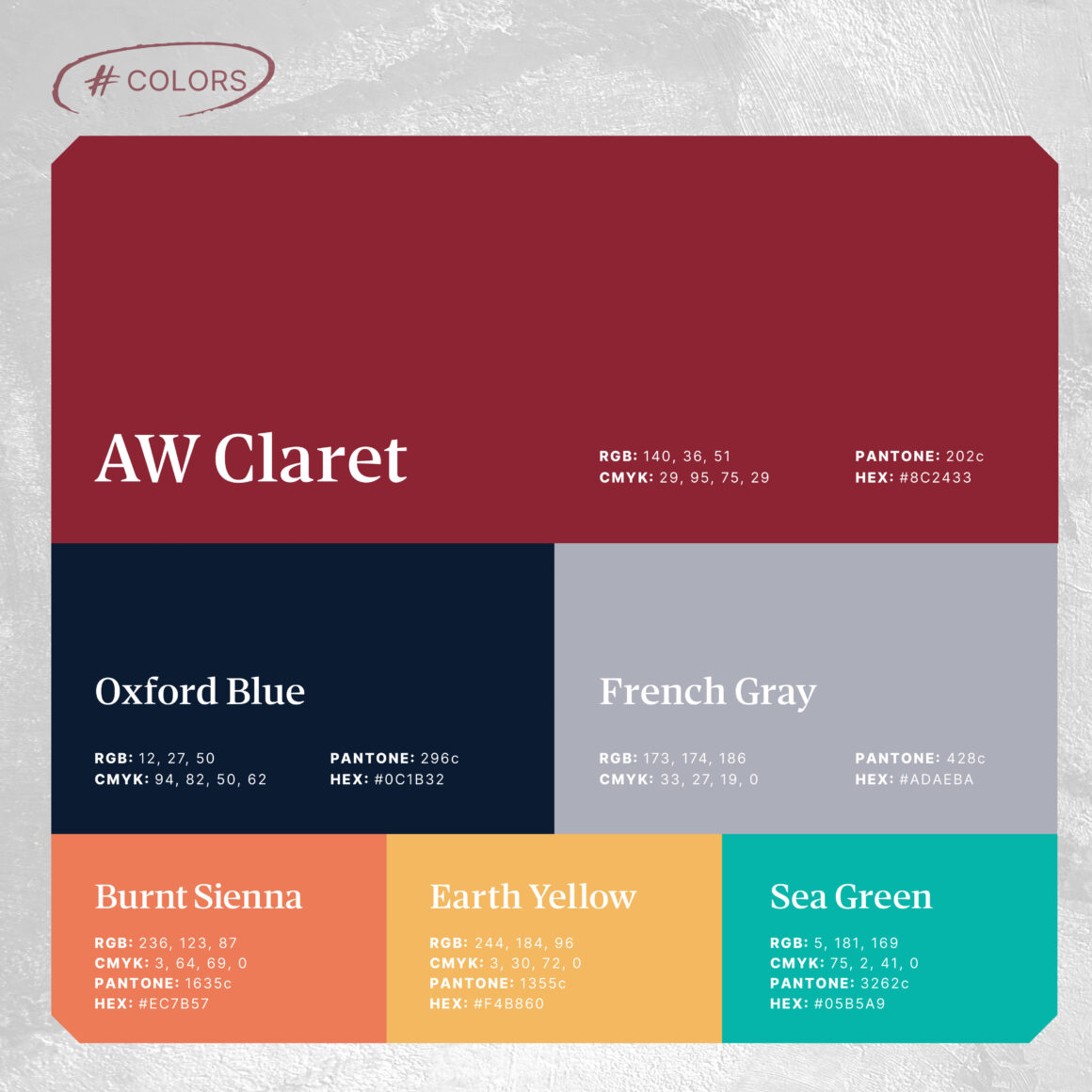
Take our color palette, for instance. The “AW Claret” color—which most people probably just call “maroon”—is still the star, but we’ve made a few updates to other colors. The green secondary color is a thing of the past, and we’ve added Burnt Sienna, Earth Yellow, and Sea Green.

graphic depicting ArachnidWork's new brand refresh colors

There’s been a similar shift in our typefaces. Our previous fonts were appealing, but safe. We wanted to add more personality to them without sacrificing readability, and we think the new ones achieve that perfectly! Our headline font stands out more and our body copy offers a nice, sleek look. And, because we like to have a little fun, we’ve added a decorative font! You’ll see it make small but noticeable appearances in our ads and social media graphics.

graphic depicting ArachnidWork's new font styles

Those are just examples of our biggest changes. A refresh entails fine-tuning of various elements that help you keep up with the latest trends and remain relevant. It could mean making tweaks to your logo, taglines, or general tone.

Signs It’s Time for a Brand Refresh

Okay, now that you know what a refresh is, it’s time to decide whether you should take the plunge. If you’re having trouble deciding, consider the following key factors. Is your brand suffering from any of these?

  • Outdated Design Elements: Do your logo, fonts, and color scheme remind you of the 80s, 90s, or any other decade of the past? That may scratch a small nostalgic itch, but it’s doing you no favors in keeping up with your audience.
  • Misalignment with Business Goals: Ask yourself if your brand truly reflects the services you offer or your mission and growth goals. If not, consider that refresh!
  • Lack of Emotional Connection: If your target audience is showing waning interest, it may be due to a lack of emotional connection. You need to offer them something meaningful!
  • Decreased Engagement or Recognition: If you’ve seen dips in engagement across multiple platforms—social media, website, or even in your physical place of business—stagnation is likely a factor. People like new stuff and innovation. Time to give it to them!

Benefits of a Brand Refresh

Knowing the signs to recognize is only part of the process. No smart business person makes a decision without knowing what they can expect out of it, so let’s take a look at the benefits. Before we do, though, know that it’s not a magical solution to waning sales. It’s an investment in building a relationship with your customers, and that doesn’t happen overnight. With that in mind, here’s what a refresh can do for you!

  • Improved Visibility and Recognition: When your brand is fresh and gives off those modern vibes, it can attract the right kind of attention in a crowded marketplace. 
  • Increased Customer Trust and Loyalty: Credibility is a huge factor in the way customers view you. People notice typos and messy ads more frequently than you may think, and having a solid brand keeps your messaging consistent and clean. It tells your customers that you care about getting it right, and that you mean business. 
  • Enhanced Ability to Target New Markets: As time goes on, new demographics will emerge, which means they could be your customers … with the right tactics. A brand update can let them know that you’re a business to watch.
  • Renewed Excitement Internally and Externally: Customers and team members alike will feel energized by a refreshed brand. Trust us. We just went through the process, and it got everyone on the team excited!

Steps to Refresh Your Brand

We’ve outlined the things that are often included in a brand refresh, but making changes with reckless abandon can be a recipe for failure. A refresh requires a thoughtful, strategic approach. Here’s what you can do to implement is effectively:

  1. Start by assessing the current state of your brand. What’s working and what isn’t? Take into account customer feedback, industry trends, and the branding and marketing of your competitors. You want your refresh to outshine them!
  2. Many efforts that involve change are anchored by a set of clear goals, and a refresh for your brand is no different. Create a list of goals, be it targeting a new audience, achieving a more modern look, or refining your messaging. They’ll help you stay focused in planning this update!
  3. We know this whole process is a big undertaking, and you can’t exactly halt operations to focus on it. Luckily, our team is more than capable of planning your refresh and letting you stay focused on your business!
  4. Have a launch plan! Knowing what your refresh will entail is important, but equally crucial is how you roll it all out. Thoughtfully implement website updates, social media announcements, and marketing materials. When you cover all your major bases, you can maximize the impact of this important update to your business.

We Can Help!

Luckily for you, we specialize in branding and marketing solutions that will help you stay relevant. Side thought: Is there a marketing-specific phrase for “keeping up with the Joneses?” In any case, our branding experts can effectively guide you through all the steps involved in this process—from brand evaluation and pain-point identification to planning and rollouts.

We’ve seen increased success for several clients who have trusted us with their brand refresh efforts. Our innovative designs, compelling messaging, and careful campaign planning have maximized the impact of the whole process. If you’ve made the decision to refresh your brand, we’re ready to help you make it happen. Get in touch with us and let’s improve your branding and marketing!

2025 Marketing Trends to Watch

two female marketers looking at a clear white board discussing upcoming marketing trends

We’ve all spent the last month celebrating some of the biggest holidays of the year—spending time with family, enjoying feasts, opening gifts, and more. Very soon, we’ll be counting down to midnight and wishing each other a happy new year. And with every new year comes change. In the marketing world, we know that change is the only constant, and we can expect that to ring true with exciting marketing trends that are taking hold. Are you ready for them? Let’s take a look at what’s up-and-coming!

Emerging Marketing Trends for 2025

AI-Driven Personalization

Love it or hate it, AI in marketing is here to stay. It’s no longer a novelty, but a valuable technology that, when handled correctly, can be an asset to your day-to-day operations. This isn’t the Terminator we’re talking about. It doesn’t target John Connor for eliminations. It targets your ideal audience for leads. From personalized ads to product recommendations that are highly tailored, you can foster a strong connection with your current audience and bring even more customers into the fray! 

Voice and Visual Search Optimization

When we hear the name “Alexa,” we no longer mentally classify it as a human being’s name. We subconsciously bring up that smart home device who plays music for us while we cook and tells us about the weather. She’s only gotten more popular as the years have passed, and it’s because she’s so helpful! More consumers are discovering what she and other devices like her are capable of, and it’s shaking up the way they shop in big ways.

That’s why including these platforms in your marketing strategy is becoming so important. Ensuring your website uses conversational language that helps search queries is vital. Equally important is incorporating high-quality imagery that has proper alt text that will help search engines with visual searches. It can seriously boost your company and product visibility!

Interactive and Immersive Content

Heading into 2025, it’s more important than ever to keep your audience engaged. Simply put, static ads on websites and in print pieces will no longer cut it. Don’t get us wrong; those still have their place, but people also require immersion these days! Interactive content like polls, quizzes, and even augmented reality (AR) experiences are set to dominate the landscape.

Say your business is all about selling sunglasses. You’re probably familiar with the rotating rack that allows customers in a physical store to try on those sunglasses and use a mirror to see how they look wearing them. What if you could give your customers the ability to “try on” any pair they want without even being in the store? This gamified marketing approach is already making waves and captivating audiences of businesses who have embraced it.

Sustainability-Centric Branding

The environment started to creep into consumer minds years ago. That creep eventually became a crawl, became a walk, became a—you get the picture. In 2025, it’s so prominent that it could be the difference between a sale and a lost customer. This planet-first mindset continues to shape the marketing landscape and, in turn, business strategies. More often than not, brands that prioritize sustainability in their products and practices stand to gain a competitive edge. This could come in plenty of forms:

  • Transparent sourcing
  • Eco-friendly packaging
  • Support of environmental causes
  • Reduction of paper waste

Sustainability has become more than just a buzzword or a hashtag. It’s become a core value of countless businesses around the globe.

Influencer Marketing Evolution

Don’t be fooled by the word “influencer.” They’re not all drama-courting pranksters who pick fights with famous boxers. Plenty of them have a focus and a fanbase that is perfect for your business and products. And we’re not talking about the huge megastars who have millions of followers. They still hold sway, but the micro-influencer is swiftly becoming a great way for brands to strut their stuff. In the new year, authenticity will be in the driver’s seat, with consumers being drawn to genuine, down-to-earth messaging from their favorite online personas. Keeping those personas top of mind when creating your marketing strategy could translate to several new customers and even lasting partnerships.

Tools and Tech

When you want to stay ahead of the curve, you need the right tools to do it. A great mind for business is crucial, of course, but it goes to waste if you don’t have a way to connect with your customers. Consider investing in solutions that enhance automation, data, and customer engagement. This could be an advanced Customer Relationship Management (CRM) system, AI-driven content creation, or any other platform that drives customer engagement. With the right technology, you can amplify your results more than you ever thought possible!

Strategies for Staying Ahead

Being aware of these marketing trends is one thing, but you still need to act on them. Here are a few short tips for taking action:

  • Stay Educated: The more you know, the better equipped you’ll be to excel in your business ventures. Attending industry events, webinars, and training sessions is a great way to achieve this.
  • Embrace Analytics: Pay attention to data so you can figure out what works and what doesn’t—and adapt to the results in real-time.
  • Partner with Experts: We know this is a lot for one business to handle, which is why it’s important to collaborate with other agencies—like us—who can help you navigate the shifting landscape like it’s your job (which it kind of is).

Keep Up With 2025’s Marketing Trends

The future has arrived with exciting technologies and marketing trends. 2025 is going to be packed with opportunities for you to innovate and level up your engagement—through AI in marketing, sustainability, authenticity, and interactivity. Ready to take advantage of those opportunities? We can help you navigate this weird world of marketing shakeups. Get in touch with us and we’ll take on 2025 together!

Holiday Marketing Tips for Your Business

cafe owner and staff determining a holiday marketing strategy

What’s the busiest time of year for your business? Chances are, most businesses would answer that question with, “The holidays!” Despite this season of wonder, joy, and deals, it can be tough to stand out. It doesn’t matter if you’re selling the best custom mugs on the internet; if you don’t have a holiday marketing plan for them, your seasonal sales might be as disappointing as a stocking filled with coal. Take some time to strategize and offer your customers something to be jolly about!

Leverage Holiday-Themed Content

Does creating holiday advertising content take a lot of work? Yes. Can you make it fun? Absolutely! The holiday season affords you a chance to do some creative things with your brand and products. 

  • Gift Guides: Create short, tailored guides by category. “Mugs for the nerds in your life” or maybe “Tea accessories for your fancy loved one.” And then there’s the “Last minute stocking stuffers” guides for the procrastinators out there.
  • Themed Social Posts: Share a digital advent calendar countdown, offer “Daily Gift” promotions, and decorate your graphics with the colors and symbols of the holiday—just be sure to keep your brand recognizable.
  • Holiday Newsletters: Curated content sent out via email is the starting point to many a gift giver’s shopping journey. Make yours stand out by offering them deals they can’t refuse.

Here’s a nice little bonus tip: Why not deck the website? It doesn’t have to be boughs of holly, but you could always hang a little Santa hat on your logo, or maybe change some icons to candy canes and gifts. It’s a pleasant reward for the customer when your content does pull in clicks, and we would be happy to make it happen for you!

Offer Special Deals and Promotions

Holiday advertising isn’t complete without a plethora of exclusive deals. Discounts are welcome by all, while free shipping can entice customers to spend a minimum amount! Flash sales and last-chance reminders are also an effective way to grab the attention of all the right customers and create urgency.

If you’re intent on selling those custom mugs, this is a great chance to offer gift packages that offer more value than purchasing each item individually. You can even throw in some more incentives! Why not include a packet of hot chocolate and a candy cane stirring spoon with the purchase of each mug? After all, who doesn’t love hot chocolate?

Optimize for Mobile Shopping

Holiday marketing isn’t just about advertisements! This one applies year-round, but it’s crucial at a time when you’re seeing heavier-than-usual web traffic. Make sure you optimize your website for customers who shop using their mobile devices! Here’s what you should prioritize:

  • Responsive Design: Is your site fast and easy to navigate? Is it pleasing to the eye on mobile? Is the text legible?
  • Streamlined Checkout: Simple, efficient checkout processes can make or break a sale. Many people may back out of a sale if they’re required to create an account, so consider adding a “Guest Checkout” option.
  • Mobile Payment Options: Fast, simple methods of payment are becoming more and more popular—you’re probably all-too-familiar with the involuntary eyeroll when you realize you need to go fetch your credit card and enter all the info. Adding Apple Pay, Google Wallet, and other quick solutions can help reduce cart abandonment.

Still skeptical? These insights from HubSpot paint a picture of just how important mobile optimization is.

Run Targeted Social Media Campaigns

We can’t stress enough how important your social media marketing strategy is during the holidays. It’s a way to connect with potential (and existing) customers and provide interaction they’ll remember. Consider running paid social media campaigns to target specific audiences that you determine based on interests. Be sure to utilize the themed visuals we touched on earlier. A holiday-themed graphic keeps your customers in the holiday spirit and lets them know that your content is fresh. It also keeps your product or service fresh in their minds, ensuring they don’t forget that amazing gift idea!

With that in mind, be aware of which platforms you’re running your campaigns on and craft your content accordingly. On Facebook, you may take a traditional ad approach, with that custom mug front and center, filled with hot cocoa with twinkling lights in the background. But on Instagram? A photo of someone cozied up on the couch next to the fireplace while holding their mug to their lips might be the more effective route.

As for LinkedIn, it’s probably not going to sell as many mugs as the other two platforms. It’s good to know when you don’t even need to include certain platforms in your campaign!

Personalize Customer Experiences

Have you ever walked into your favorite cafe, bookstore, or other establishment to be recognized and greeted by the staff? It probably made you like the place even more. These people know you and like serving you! That’s the feeling you’re trying to spark with your holiday marketing. When they know you want to make their experience an enjoyable one, they’re more likely to support your business. Here’s what you can do:

  • Data-Driven Personalization: Utilize data on the buyer’s browsing history and past purchases to make recommendations on products that are relevant to them. 
  • Exclusive Offers for Loyal Customers: Do you have a customer who has spent a significant amount of money on your custom mugs? Consider rewarding them with an exclusive discount—and ask them how they find space for all those mugs.
  • Holiday-Themed Loyalty Programs: Offer your customers additional loyalty points or holiday bonuses to encourage them to make future purchases. We know we would love to get a coupon that says, “Thanks for your purchase! Enjoy 15% off the next time you shop with us!”

Focus on Customer Service

This is another one of those things that applies year-round—not just your holiday marketing efforts. When stress is high for many customers, making their experience as pleasant as possible is vital! So how do you deliver that pleasant customer journey and handle inquiries with a genuine smile? It’s all about timeliness and being proactive!

This is your chance to be flexible. Offer your customers multiple support channels—chat, email, and phone support. All kinds of customers exist, and they don’t share the same communication preferences. Of course, none of that matters if you don’t answer your phone or respond to messages in a timely manner. Leaving customers hanging is a surefire way to sour their experience.

Want to take your customer service a step further? Have a system in place to notify buyers of updates to their orders, shipping deadlines, and any delays. A late package with no communication is the perfect recipe for a Grinch.

Plan for Post-Holiday Engagement

You thought the holiday rush was over once the holiday itself ends? Think again! While it may not be nearly as busy, there will likely be a handful of gift returns or other inquiries—such is the lifecycle of the holiday shopping season. Maybe a customer received a misprint or has to make a return because they finally ran out of cabinet space. Whatever the reasoning, it’s best to be ready for:

  • Walk-in gift returns
  • DMs on social media accounts
  • Comments on your posts
  • Calls with questions

When it comes to social media, engagement is key here. Hopefully you’ll be getting nothing but comments saying how much your customers love drinking their coffee out of their new custom mug, but the opposite is a possibility (some people are hard to please). Responding to positive and negative feedback shows your customers that you really care about their satisfaction, and could be the factor that encourages them to return.

A Holly Jolly Marketing Strategy

This season can bring plenty of fortune to your business, but only if you put some work into your holiday marketing strategy. By leveraging holiday content, optimizing your website, running great campaigns, and practicing effective customer service practices, you’re letting your customers know that they matter to you. If you need a little help with managing all of it, our designers and developers are happy to craft a holiday plan for your business. Let us do the work while you sit back and enjoy some hot cocoa.

AI for Small Business: Part 2

group of marketers using ai for small business

Last month, we took a bit of a technical look at what makes artificial intelligence tick. While a look under the hood may be a bit of a mindboggle, it hopefully gave you a small understanding of how AI works. With that out of the way, though, it’s time to get to the “good” stuff: How to implement AI for small business.

From automating routine tasks to getting insights into customer behavior, there are plenty of ways to use AI. Let’s explore the practical applications and other benefits!

Benefits of AI for Small Business

In knowledgeable hands, AI can be a powerhouse of a marketing tool. We’re not talking about the low-quality engagement farming and spam posts you see on Facebook. We’re talking about the companies who grow with the help of AI used in thoughtful ways. Let’s dive in.

Improved Efficiency

No business is free from tedious and time-consuming tasks; after all, invoicing, scheduling, and inventory are important parts of most companies. AI-powered tools can be implemented to handle those things so you and your team can focus on projects and other tasks that drive growth.

Enhanced Customer Service

Chatbots generally induce eye rolls at their mere mention, but a high quality, AI-powered one can provide real value to your customers and enable you to step in when need be. It means 24-hour support that provides answers to common questions and minor issues. These tools can even analyze and learn from previous customer interactions to be more effective in the future by establishing a “knowledge base”.

Data-Driven Insights

Customer data is readily available. It’s knowing how to use it that’s the real trick. Sometimes, though, there’s simply too much data available, to the point where it’s a huge task just to take it all in. With artificial intelligence, the analysis can be taken care of without taking up the time of you and your team. Tend to more pressing tasks while your customer data is organized in a way that helps you strategize, develop products, and improve customer service.

Cost Reduction

Time is money, which is why freeing up your employees’ time is so vital. When they’re not tied up with menial tasks, they’re able to help in significant ways, leaving the tedium to the AI that truly doesn’t mind doing those “bland” chores. We guarantee the fees for even the best AI tools out there will be significantly less than paying an employee to do these same tasks (and take much longer to do them). Put your people to work doing things that inspire them! The technology will handle the rest, with monitoring of course.

Practical Applications of AI in Business

The potential uses of AI for small business goes beyond answering queries and taking care of tedious tasks. If you have a deep understanding of how to implement it, you can take advantage of some impressive potential.

Operations and Inventory Management

Do you constantly struggle with inventory issues? If you don’t order the right amount of inventory, you take a hit. Empty shelves mean dissatisfied customers and packed ones represent money your business wasted. With AI, you can predict future inventory needs using market trends and other data. Additionally, it can help plan supply chain routes and schedules to minimize shortages.

Finance and Accounting

Data entry and other bookkeeping tasks can become quite time consuming and tedious. With the help of technology, you can free up time and reduce errors. Furthermore, AI can be utilized to detect unusual activities in transaction patterns to help combat fraud. When your finances are protected this way, it makes financial planning much easier.

Marketing and Sales

AI has the ability to analyze any data presented to it. We touched briefly on this while discussing data-driven insights above, but it goes deeper than that. It can take in client behavior such as social media activity to help you identify your target audience. Additionally, it can segment your customers for personalized marketing pushes. And of course, it can provide a big assist in creating content that your customers find valuable.

Human Resources

Say you’re in the middle of a hiring push and you’re sitting on hundreds or even thousands of applications. It’s a good problem to have, but a problem, nonetheless. With artificial intelligence tools can screen resumes and identify top candidates, which speeds up the hiring process and helps you select the right person for the job.

Steps to Implement AI in Your Small Business

Knowing the benefits of AI for small business, it’s time to implement the tools themselves. But how do you do that? If you need some pointers, we’re always happy to help, but here are a few tips for making sure you’re handling it correctly.

  1. Identify Areas for Improvement: When you know where your shortcomings lie, you’ll have a much easier time with implementation. If you struggle with inventory, start there!
  2. Research AI Tools: Not every AI tool is the same. Some are built for small businesses, and others are for more personal uses. We suggest opting for something that’s scalable and user-friendly.
  3. Pilot Projects: Don’t trust your new AI software with your biggest project. Start with a small project to measure effectiveness, and trust it with incrementally bigger tasks as you get comfortable with it.
  4. Training and Development: AI is useless if 90% of your company doesn’t know how to use it. Take the time to train your employees and make sure they understand the tools.
  5. Measure and Optimize: Keep track of how the AI is doing. If you have the data to back up performance, it’s easier to make adjustments or leave it as is.

Challenges and Considerations

With every new technology comes reservations and distrust. We’re already seeing a good amount of it in regards to artificial intelligence. Understanding what AI is and does can help to dispel rumors about it being the “boogie man” of the tech world, but there are considerations to take into account that aren’t black and white.

Budget Constraints

AI can offer an appealing return on investment, but that doesn’t make the up-front cost of some tools less intimidating. Take some time to evaluate the long-term benefits posed by AI and make your decision based on your findings. Try out the free level of some tools for a taste before fully jumping into a paid subscription.

Data Privacy and Security

One reason many of your customers have for sticking with you is their trust in you. That’s why it’s important to maintain that trust throughout the AI implementation process. If you’re using AI in business, it’s important you comply with data protection regulations and have good security in place so you can safeguard your customers’ sensitive information. Your business location and where you service customers have a large impact on your ability to utilize data, so be sure to check into regulations and restrictions.

Skill Gap

AI isn’t necessarily an “Easy” button. Technical expertise is required to use it, so investing in training and hiring professionals could bridge this gap.

Change Management

Change can be scary for employees who have gotten used to their roles and the tools they use within them. When you’re getting ready for AI implementation, have a change management strategy in place. Be ready to communicate, train, and take other measures that will ensure a seamless transition to whatever new processes are presented.

The Future of AI in Small Businesses

AI is growing at a rapid pace, constantly shaping the landscape of countless industries in the process. It will continue to evolve by helping with customer insights, automated processes, and advanced analytics. This means your business capabilities will be enhanced, but you’ll need to keep up to stay competitive. If AI implementation never happens at your business while others thrive with it, it can be tough to regain your footing. No matter your thoughts on this technological behemoth, it’s part of our world now. Just as the internet shaped the professional landscape, this is doing the same.

Embracing AI for Small Business

New tech can be intimidating, but the benefits AI offers are undeniable. Improved efficiency, enhanced customer service, data-driven insights, and cost reduction are all benefits made possible by AI, and approaching them in a careful, intentional way can help you keep up and see your business thrive.

If you’re ready to take your business to the next level, trust a business that has taken the time to use artificial intelligence in an effective way. Get in touch with ArachnidWorks and let’s set our sights on the future!

AI for Small Businesses: Part 1

business partners on a laptop

What is AI? We’ve seen it in countless TV shows, movies, and books. From R2-D2 and C3PO wandering the desert to Arnold Schwarzneggar’s T-800 declaring, “I’ll be back,” intelligent machines have long been a staple of science fiction—except now, the “fiction” part is becoming a thing of the past.

Unless you’ve been living off the grid for the last few years, you’ve heard the term “AI” (or Artificial Intelligence) frequently. After all, it’s taking the world by storm and shaking up industries in some pretty significant ways. The entertainment, restaurant, industrial, and even marketing fields are being affected by it. People are utilizing AI for small businesses wherever they can to improve processes and products, and why wouldn’t they? It can be a huge time saver and help you run your business! But as with any technology, how to use AI for small businesses is a skill that requires practice as well as trial and error.

It isn’t just about typing in prompts and using exactly what AI spits out. It’s about making the effort to learn the ins and outs so you can realize its full potential for your business. Using AI for the sake of using AI won’t help you in the long run, so let’s go over the knowledge you’ll need to know how to use AI—more specifically, how to use artificial intelligence for businesses. 

How It Works

We don’t want to bore you with too much technical stuff, but a general understanding of how these systems work can help you utilize these tools better.

Machine Learning

Machine learning enables computers to teach themselves using data and its patterns. Say your friend is trying to perfect a cake recipe, and they’re using you as their test subject. They bake several cakes that are slightly different. Some have more sugar, while others use different icing.

After you try out each cake, your friend asks for your opinion. You give feedback like, “This needs more sugar,” and your friend adjusts the ingredients to take that into account. With enough recipes and feedback, they refine their recipe to make the perfect cake. That’s the general process the machine learning model uses.

Deep Learning

Deep learning is a subset of machine learning that focuses on neural networks that are modeled after the human brain. Essentially, it goes through a learning process similar to our own. There’s a lot of trial and error that helps it learn and improve based on its mistakes.

Say you want to teach a computer how to play Pac-Man. Before deep learning, you’d have to tell all of the rules in excruciating detail. Now, you’d simply tell it to play the game until it got the hang of it. It would start out moving randomly, collecting a few dots by accident and getting killed by the ghosts. But it would learn from those experiences; eating dots is good and ghosts are bad. Eventually, the computer would get really good at the game. It would develop strategies to avoid the ghosts, learn the ideal routes to take, and teach itself how to maximize its score.

The processes that drive this kind of AI learning come together to achieve a huge array of things. Image and speech recognition, healthcare diagnostics, and natural language processing (NLP) are all able to be handled by a deep learning model. Speaking of natural language processing…

Natural Language Processing

Using AI for small businesses relies heavily on Natural Language Processing (NLP). This is how computers are able to understand and generate language in a way that makes sense. If everything we’ve discussed so far is what powers C-3PO’s “brain,” NLP is what helps him speak his mind!

In order to understand Anakin Skywalker (his creator), C-3PO used data available to him to learn things like sentence structure, word classification, and implied meaning and generate coherent words based on them. His artificial brain formed thoughts as data, and that data was translated into audible words that Anakin could understand. Thus, they were able to have conversations! 

Identifying Your Business Needs

Now that you have a basic understanding of how AI works, let’s take the first step to utilizing it to help your business. Before you even begin to type AI prompts, you need to identify what your business goals actually are.

Assess Your Challenges

What does your business’s current landscape look like? What are your pain points and where could you improve? Consider all of these things and imagine the possible solutions you could implement with the help of AI. Whether it’s improving your processes, better understanding your customers, or bolstering your product offerings, there’s a use for AI here!

Define Your Objectives

What do you want to achieve by implementing AI? SMART goals are probably something you’re familiar with, so let’s start there. Make sure your objectives are Specific, Measurable, Achievable, Relevant, and Time-bound. As an example, you could set a goal of increasing customer engagement by twenty percent within four months by using recommendations from AI.

Blend AI With Your Overall Business Strategy

AI initiatives should never replace your processes. Rather, they should be used to bolster your existing ones and align with your business strategy. Integrating it into your big vision helps it become a valuable addition rather than a pet project.

Next Month: Implementing AI for Small Businesses

The inner-workings of artificial intelligence are complicated and technical. We hope you stuck with us through that, because in part 2, we’ll get to the even better stuff! You’ll learn to use your understanding of AI to improve your processes!

In the meantime, we’d love to answer any questions you have about artificial intelligence for businesses or marketing in general. Reach out and strike up a conversation!